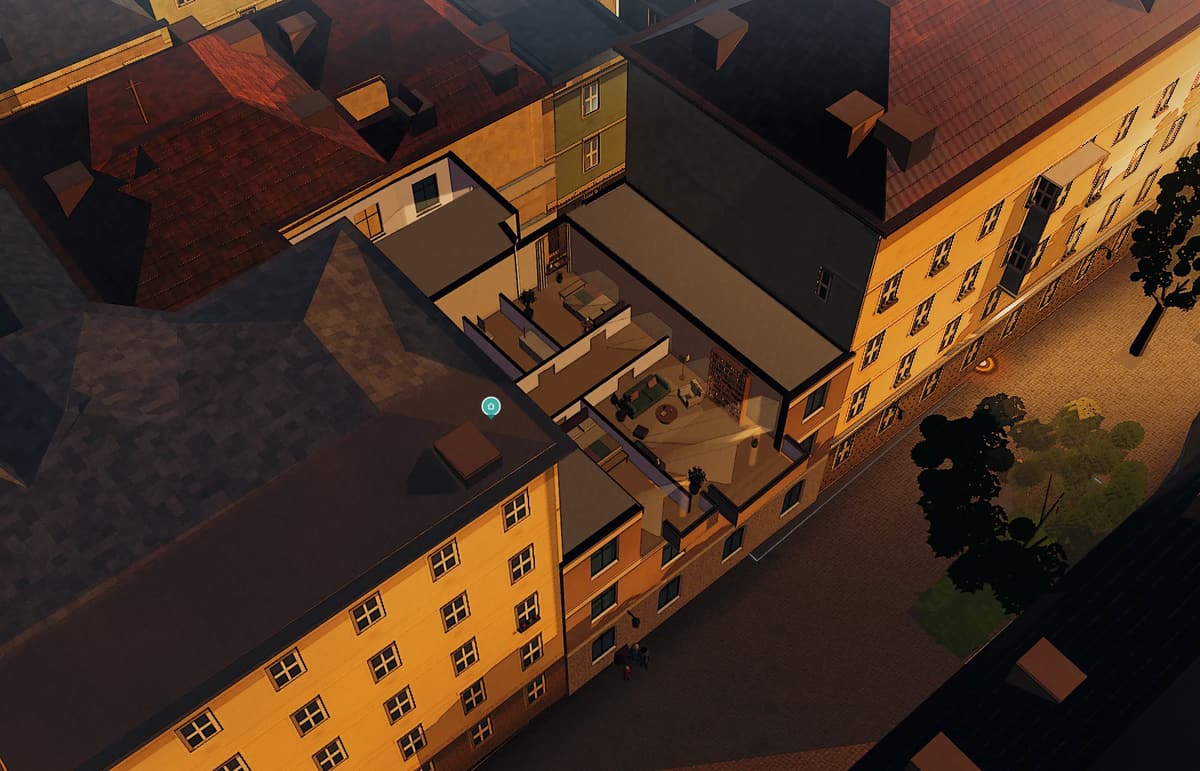
How much winter sun does a Vienna flat get?
On Sunday 25 October 2026 the clocks go back. From then on the sun sets before 17:00 in Vienna for 103 days, until 4 February, and around 11 December as early as 16:00. How much of it reaches a flat is decided not by the neighbourhood, but by the window.
The figures for the clock change
Calculated astronomically with the formulas of the NOAA Solar Calculator for central Vienna, 48.21° north, in Vienna time and rounded to the minute; in the outer districts the times differ by up to a minute. Sunrise and sunset refer to a free horizon.
Why the window decides, not the neighbourhood
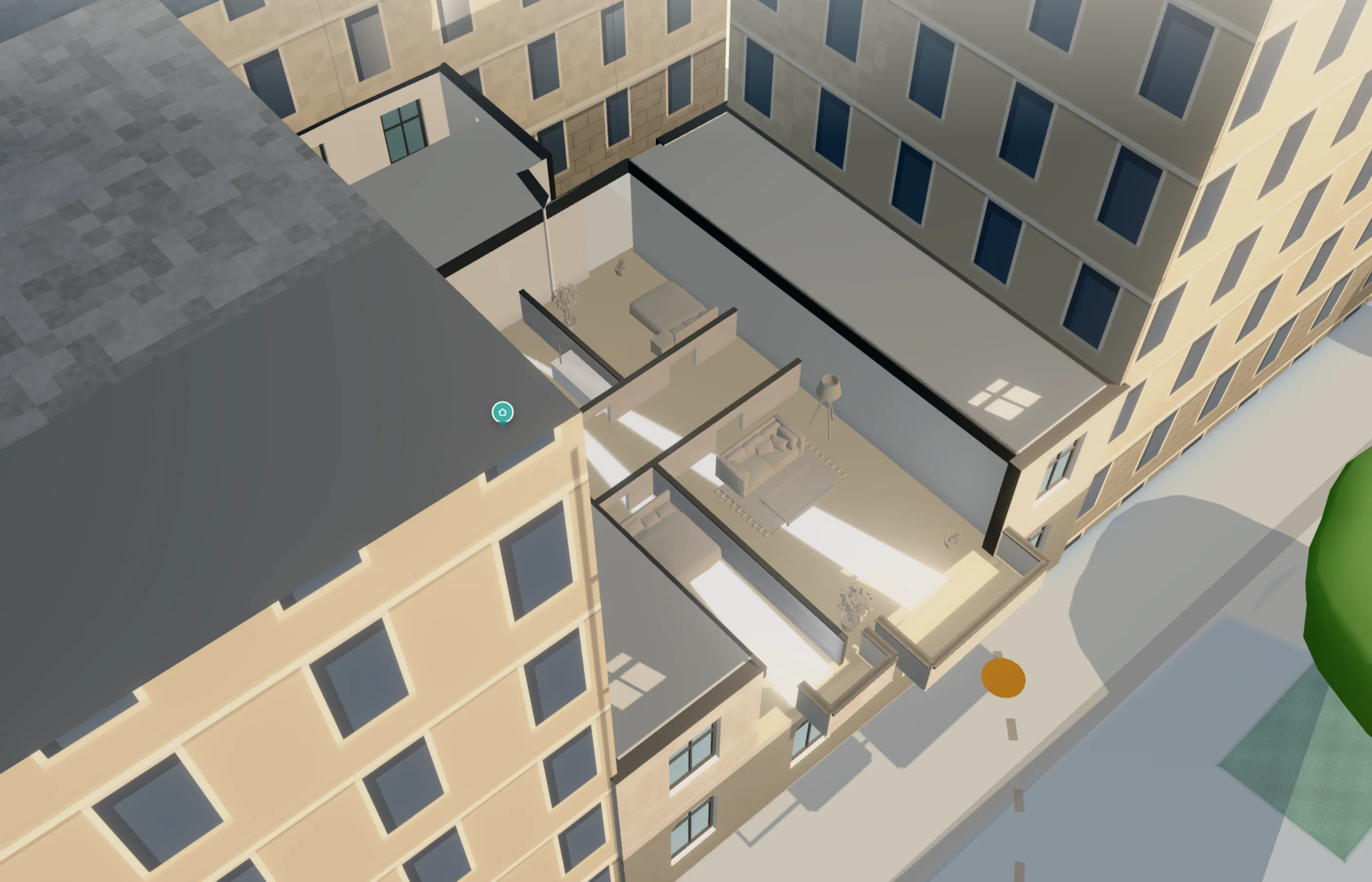
On 21 December the noon sun stands 18.4° high. At that angle a 21-metre Gründerzeit house casts a shadow 63 metres long. In a 15-metre east–west lane, the shadow line on the opposite facade then sits at 16 metres: below it — with Gründerzeit storeys of about 4.2 metres, from the ground floor up to about the third floor — no direct sun arrives at noon. The noon sun reaches the pavement in front of that facade only from a height of 54.5°, so never in December.
The other side of the street faces north. A window pointing due north sees not a single direct ray of sun between the start of autumn and the start of spring, from 23 September to 20 March — even with nothing opposite, because in these months the sun rises south of east and sets south of west. The same lane has one side with winter sun on the top floor and one without.
That is why a whole neighbourhood never has “zero hours of sun”. Single windows, ground floors and courtyards go without direct sun; two houses on, at a crossing or above a low neighbour, it looks different. How much winter sun a flat gets can honestly only be said for one address, one floor and one window side.
What to check before you sign
First the window side: towards south, south-east or south-west winter sun can come in, towards north it cannot. Then what stands opposite: how tall the house across is and how wide the lane in between. Then the floor — in dense quarters it can make hours of difference. And a viewing in October at noon says little about a December afternoon at three.
For newsrooms
Every figure on this page is calculated and may be used with the credit “Azima / Vienna Living Map”. For a particular address, an example from a district or more images, a short message is enough.
Quotable
- When summer time ends on 25 October 2026, the sun sets before 17:00 in Vienna for 103 days — until 4 February.
- Around 11 December it sets as early as 16:00; on 21 December at 16:03, after 8 h 20 min of daylight.
- At noon on 21 December the sun stands 18.4° high, on 21 June 65.2°.
- A window facing due north gets no direct sunlight at all from 23 September to 20 March.
- In a 15-metre east–west lane between 21-metre houses, the shadow line on the opposite facade sits at 16 metres at noon on 21 December; below it, no direct sun arrives.
“A whole neighbourhood never has zero hours of sun — a single address can.” — Lucas Jakubeit, builds Azima
How it is calculated
Sun position, sunrise and sunset: astronomical, with the formulas of the NOAA Solar Calculator (Meeus) for 48.21° north, in Vienna time and rounded to the minute. The example lane is plain trigonometry with the sun position of 21 December. For a single address Azima calculates with the measured building heights from the City of Vienna’s roof model and the terrain, per floor and — with a floor plan — per room. It calculates direct sun under a clear sky; high fog and clouds are not part of the calculation.
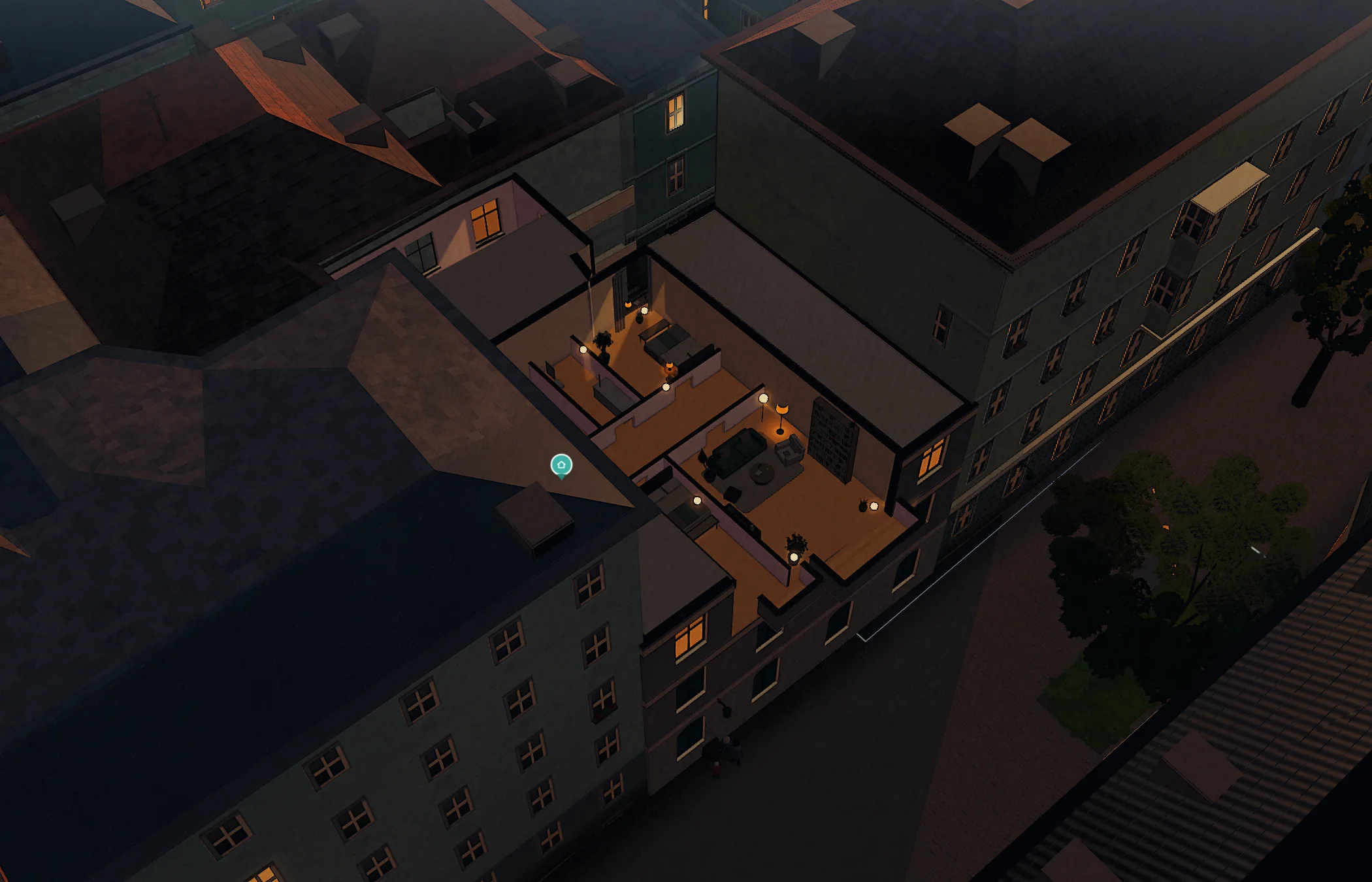
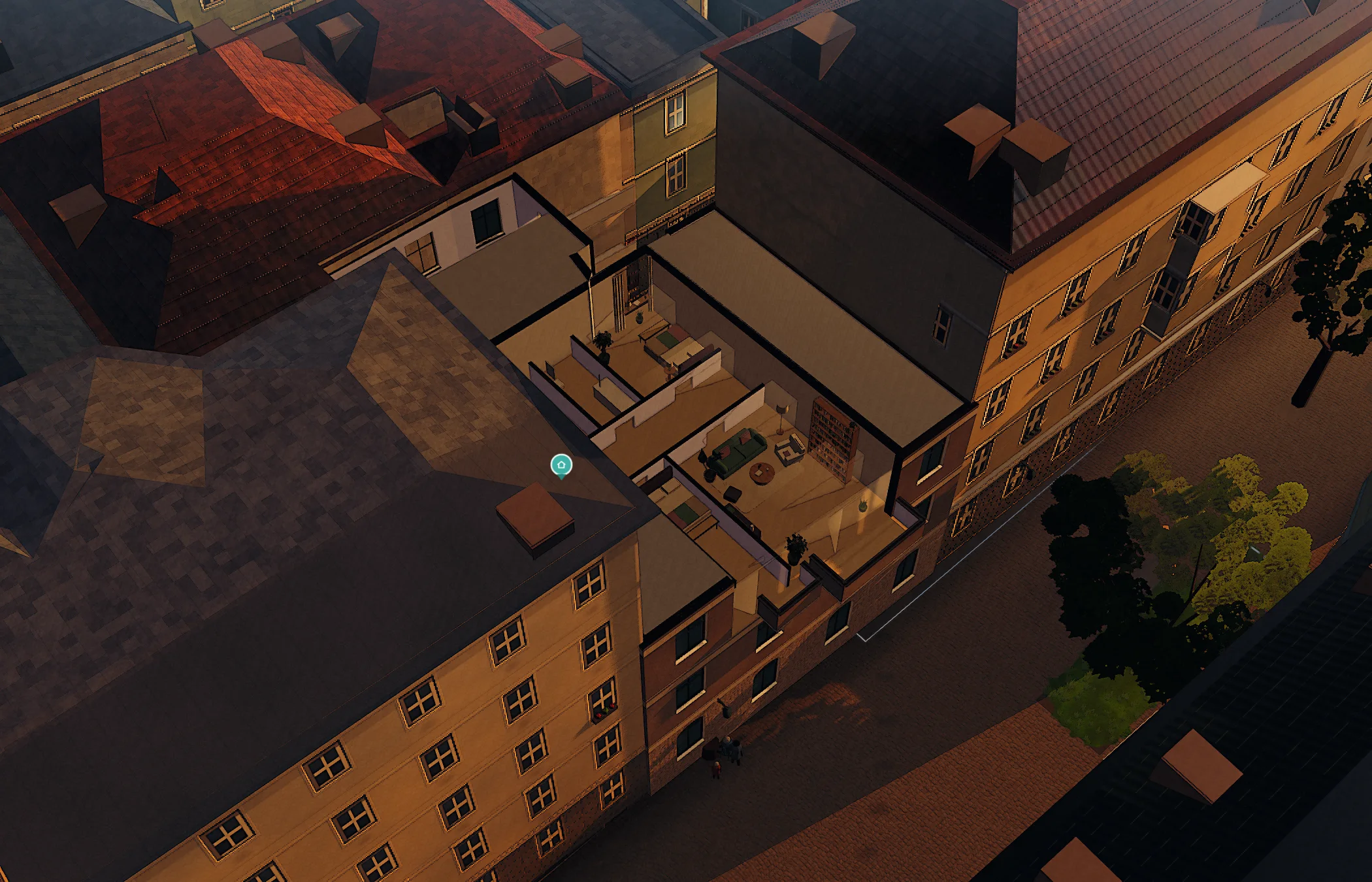
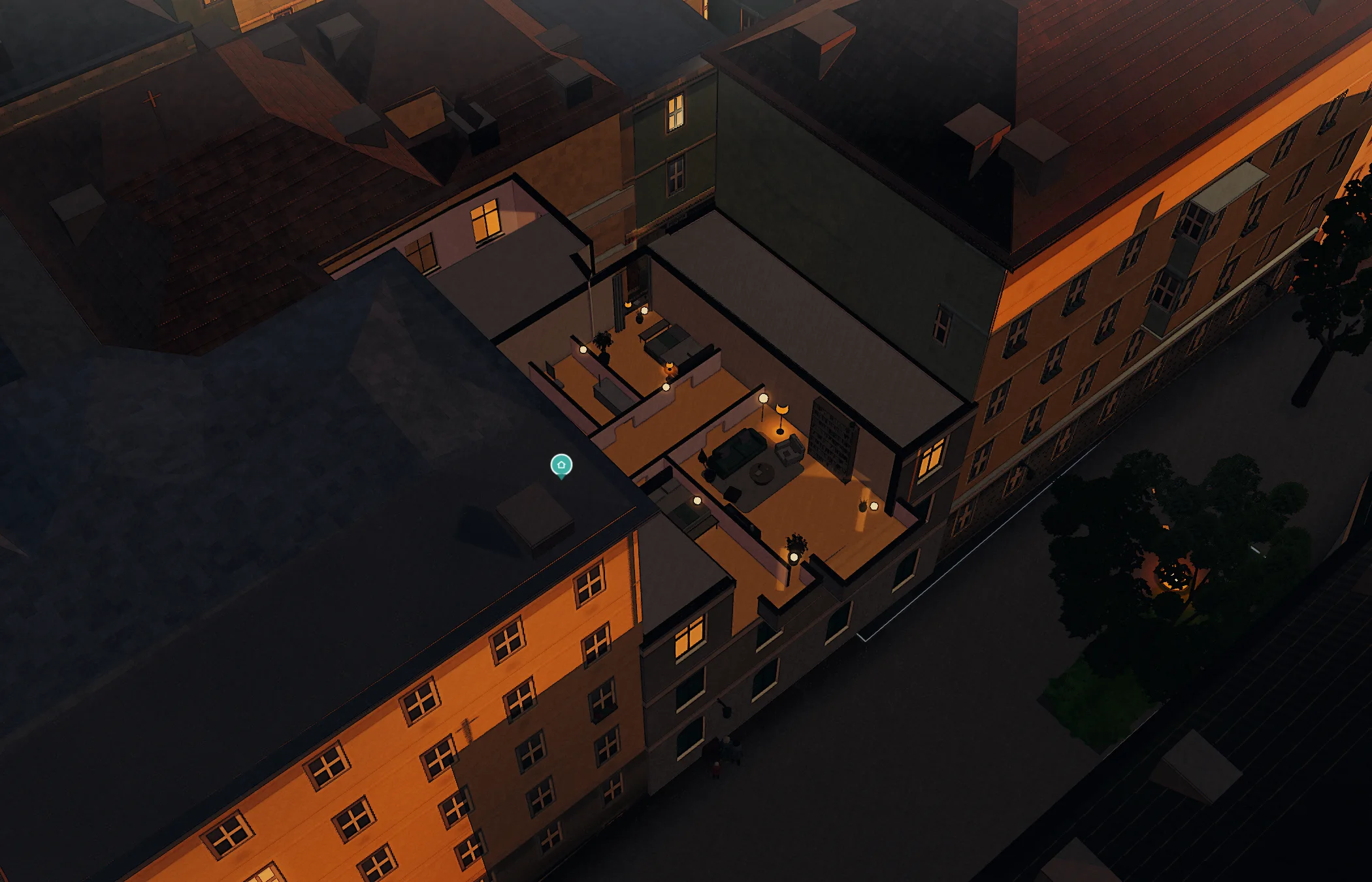
Images
The three images above (2100 × 1350 pixels each, a click opens the full size) and this page’s preview image (1200 × 630) may be used for reporting. Credit: “Azima / Vienna Living Map · building and tree data: City of Vienna – data.wien.gv.at · map: © OpenStreetMap contributors”.
Contact
Lucas Jakubeit · [email protected] · LinkedIn
Frequently asked
When do the clocks go back in 2026?
In the early hours of Sunday 25 October 2026 the clocks go back from 3:00 to 2:00. Summer time starts again on Sunday 28 March 2027.
When does the sun set in Vienna in winter?
From 25 October before 17:00, for 103 days until 4 February. The earliest is 16:00, around 11 December; on 21 December at 16:03. Calculated for central Vienna, 48.21° north.
How long is it light in Vienna on 21 December?
Between sunrise (7:42) and sunset (16:03) lie just over 8 h 20 min, a little more than half of 21 June with 16 h 5 min. At noon the sun stands 18.4° high.
Does a flat with north-facing windows get sun in winter?
A window facing due north does not: from 23 September to 20 March the sun rises south of east and sets south of west and never stands in front of that facade. Towards the south most winter sun can come in — if the house opposite lets it through.
Can a whole neighbourhood be without sun in winter?
No. Sun falls on windows, not on neighbourhoods: in an east–west lane the side with south-facing windows gets winter sun on its upper floors, the north-facing side gets none, and at a crossing or above a low neighbour it is different again. Single windows, ground floors and courtyards go without direct sun — that can only be calculated per address, floor and window side.
How do I find out how much winter sun my flat gets?
With the Azima light check: enter the address and the floor, and Azima shows the hours of direct sun for today and for 21 December — with a floor plan, for every room. It is calculated in the browser from the City of Vienna’s measured building heights; checking costs nothing.
The shortest day — one flat, quarter hour by quarter hour · Is the flat dark? · Light & sun in Vienna · The light check · All guides