
Light & sun in Vienna — where the sun actually reaches
Above Kalksburg almost the whole sky stays free; at Schmelz the December sun reaches the centre for only about 0 hours. Measured from real building heights and terrain — Grätzl by Grätzl.
How bright a home is starts long before the floor plan: with the street. Vienna sits at 48° north — at noon the sun stands about 65° high in June, but only about 18° in December. In an open, low-rise Grätzl that difference hardly matters; between the tall facades of a Gründerzeit lane it decides everything. At 18° a 20-metre facade throws a shadow of over 60 metres — the lane opposite gets no direct sun at street level all winter.
That is why a flat viewed in June can feel like a different home in December. Below: where the sky stays open, and where the winter sun actually still reaches — measured from real building heights and terrain, place by place.
Where the sky stays open
Sky openness 0–100 from real building heights (OSM) and the legal building class (zoning) — high = low, open building stock.
Measured: where the December sun still reaches
…and where it barely does
Direct-sun hours at the winter solstice, computed at each Grätzl centre — an obstruction-horizon model over real OSM building heights, terrain-corrected. Not a statement about a single flat: floor, orientation and courtyard side decide there.
What this means at a viewing
Ask what stands opposite before asking about the orientation — in a dense quarter the neighbouring facade takes more light than a south window wins. See the flat at the time of day you will actually live in it; the evening sun is the first thing a tight lane loses. And in the dense districts the floor is the light budget: upper floors keep hours of sun that never reach the ground floor.
None of this makes a dense Grätzl a bad place to live — short distances, cafés and the city at the door are exactly what the open, bright edges give up. It is a trade-off you should see before you sign, not after the first winter.
For the flat you are actually looking at: calculate the hours of sun per room of your flat — with the floor plan from the listing, for 21 December as well as 21 June.
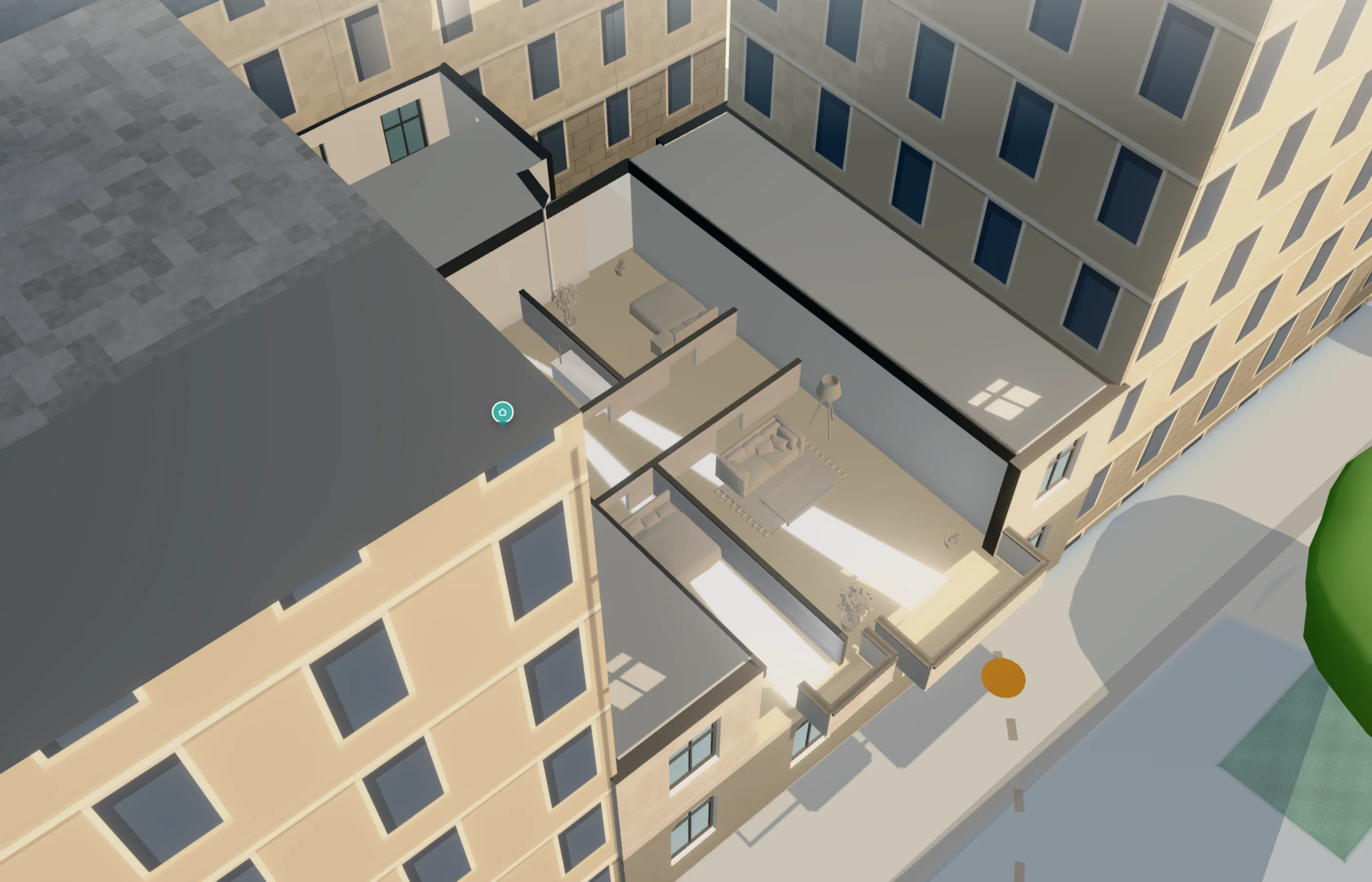
Example: the sun's path over Spittelberg →
Frequently asked
Where in Vienna do you live with the most light?
The open, low-rise areas: in our data the most open sky sits over Kalksburg, Mauer, Kaiserebersdorf — and district-wide over Floridsdorf, Döbling, Liesing and Hietzing. The trade-off: bright usually means further from the centre. The dense Gründerzeit quarters are the opposite case — light falls narrow between tall facades.
Why does the winter sun matter so much?
Vienna sits at 48° north: at noon the sun stands ~65° high in June but only ~18° in December. At 18° a facade throws a shadow more than three times its height — a tight Gründerzeit lane gets barely any direct ground-level sun all winter. Measured examples: Oberlaa keeps about 8 hours of December sun, Schmelz about 0.
What should you check at a flat viewing?
The time of day — a flat seen at noon hides how early the evening sun disappears. The side: courtyard or street, and what stands opposite (the neighbouring building blocks more light than the orientation wins). The floor: in dense quarters upper floors get hours more sun than the ground floor. And the season: a June viewing says little about December — that is the most expensive surprise.
How does Vienna Living Map measure light?
An obstruction-horizon model: every surrounding building (real OSM heights) and the terrain block part of the sky; the sun's real path (summer and winter solstice) is swept against that horizon at each Grätzl centre. Where building heights are too thin to measure, the model falls back honestly to the legal building class (zoning) — and says so. A single flat always depends on floor, orientation and courtyard side.
The shortest day — one flat, quarter hour by quarter hour · Bright, open places to live · Cool living · Weather & climate · All districts