
Where do you live in the green — in a Kleingarten?
The Kleingarten is a Viennese way of living all its own: a little house in the green, right inside the city. What used to be the weekend allotment has in many places become a year-round home. We show where the allotment colonies lie.
Hernals
122 allotment colonies · your own garden, quiet on the edge
Ranked from open data (City of Vienna OGD, OpenStreetMap, Wiener Linien, Statistics Austria) — not a tourist tip list.
Along the hillsides, railway embankments and city edge run Vienna’s allotment colonies — thousands of plots with a hedge, a garden gate and a small house. Once the Schrebergarten for the weekend, today many colonies allow year-round living (the “Kleingartenwohnhaus”). You live quietly, green and to yourself — with the city still within reach.
We count the allotment colonies mapped on OpenStreetMap (landuse=allotments) around each Grätzl. Most sit on the green edges: on the slopes of Hernals, Ottakring, Döbling and Penzing, on the Laaer Berg in Favoriten, and far out in Donaustadt and Floridsdorf. It is a way of living with its own rules — so a culture signal, not a point in the Living Score.
The allotment districts
Allotments are very local — tied to hillside, railway and city edge. These Grätzl sit in the middle of the colonies:
The Grätzl with the most allotments
The trade-off is clear: an allotment means your own green and quiet — in return, longer journeys, often less transit at the door, and the special rules of the allotment system (zoning, building limits). Anyone after the little house in the green gladly accepts that.
What makes an allotment
A Kleingarten is not just a plot but a culture: you are a member of the association, you know the neighbours over the fence, and at the weekend it smells of lawnmower and barbecue. Many plots are now zoned for year-round living — an affordable route to your own house with a garden, but with strict building and size rules. You don’t buy a plot like any other, but a piece of a very Viennese idea of living.
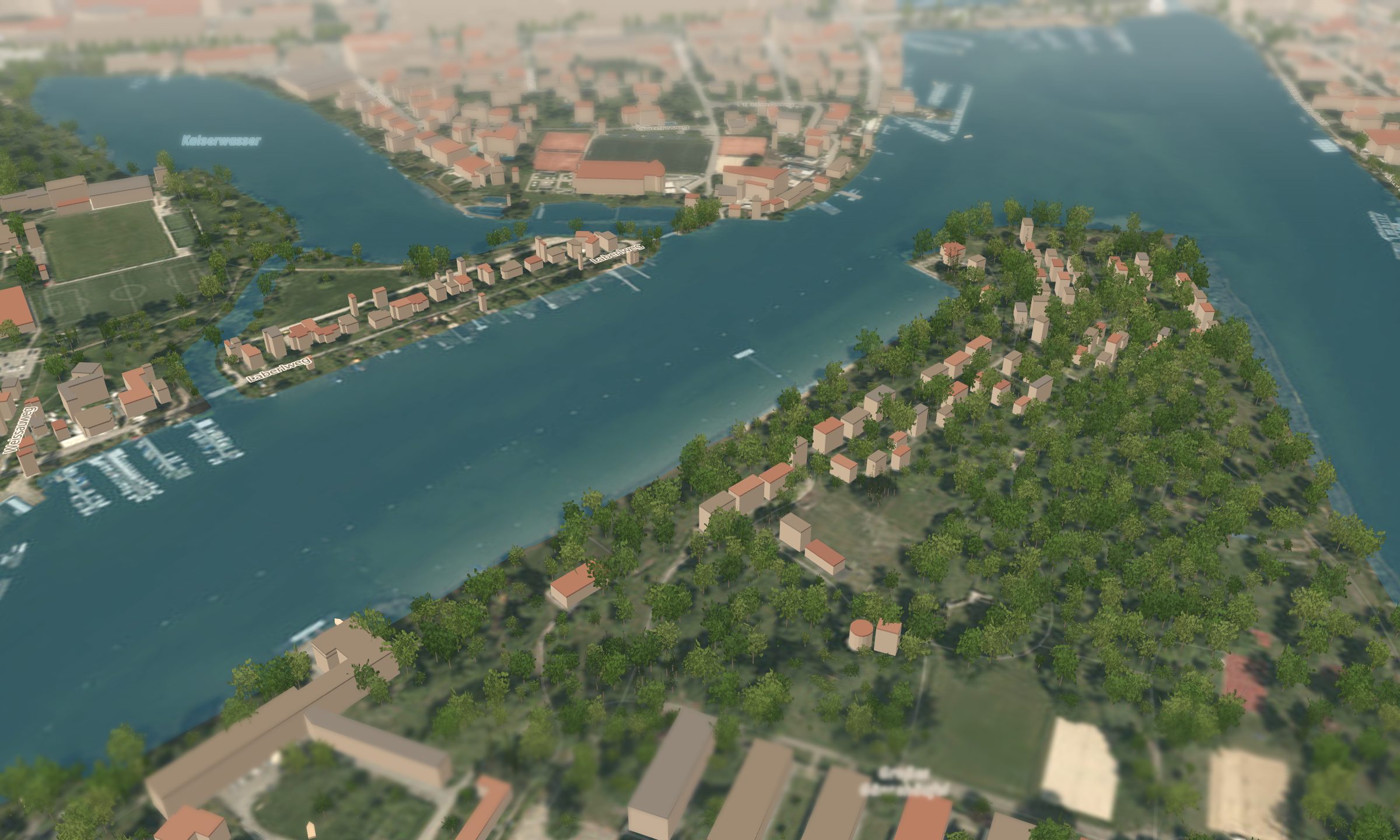 How the cityscape is built. Rendered from our own 3D map — buildings, trees and water from open data. Map data: City of Vienna (CC BY 4.0), © OpenStreetMap contributors.
On the map
All 740 across Vienna — real locations from open data. Tap to explore the live map.Explore allotment areas
The Grätzl page shows how green and quiet a location is and how long it takes into the centre — the two questions that matter for an allotment. A good start for anyone after their own green in the city.
Explore green, quiet Grätzl in Vienna Living Map →Frequently asked
What is a Kleingarten in Vienna?
A Kleingarten (allotment) is a small garden plot in an association colony, usually with a garden house. In many Vienna colonies year-round living is now allowed (“Kleingartenwohnhaus”) — a distinct, often more affordable way of living with your own garden in the middle of the city.
Which districts have the most allotments?
Most allotment colonies lie on the green edges and slopes: in Hernals, Döbling, Ottakring and Penzing, on the Laaer Berg in Favoriten, and in Donaustadt and Floridsdorf across the Danube.
Can you live in an allotment all year round?
In many but not all colonies: only where the zoning is “Kleingarten für ganzjähriges Wohnen” is a main residence allowed. Otherwise it is a pure recreation garden. When buying, the zoning is the most important thing.
Which Grätzl fits you? → · All 23 districts · All Grätzl · Live by lifestyle
More guides
☀️ Where should you live in Vienna to stay cool?🌳 Where do the most trees line the streets?🍷 Where do you live among Heurigen and vineyards?🌭 Where do you live with a Würstelstand round the corner?🍺 Where do you live with a Beisl round the corner?🏢 Where does municipal housing shape living in Vienna?🐶 Where do you live well with a dog in Vienna?🚲 Where is Vienna most bike-friendly to live?☕ Where do you live in the middle of Vienna’s café culture?🛍 Where do you live with a market on your doorstep?🏡 Where do the Viennese live, not the tourists?🌲 Where do you live by the Vienna Woods — green and hilly?