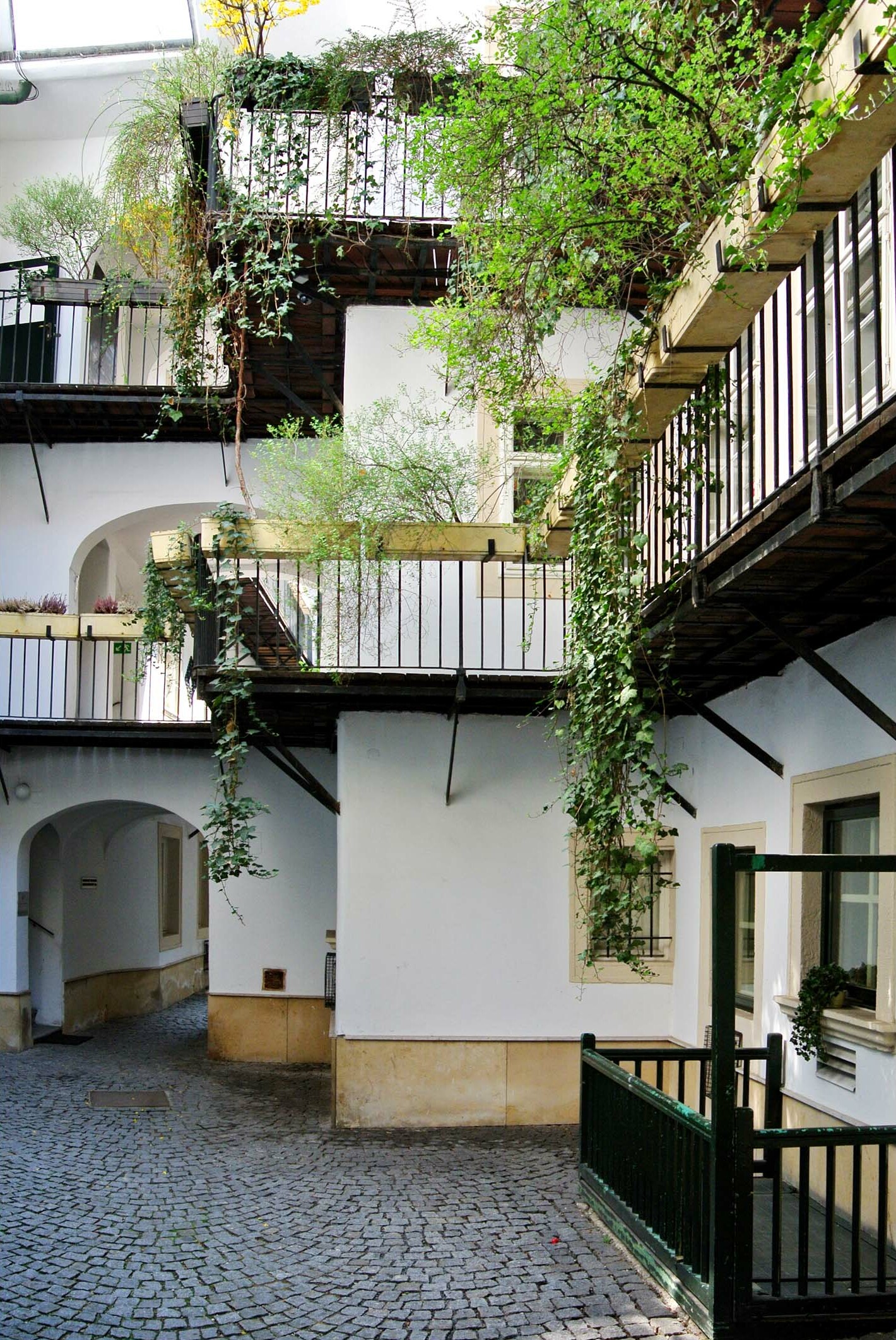
Altbau or Gemeindebau — which suits you?
The two housing forms that shape Vienna like no others — and two completely different ways in. The Altbau runs through the open market and charges a character premium; the Gemeindebau runs through Wiener Wohnen and charges waiting time. What that means in daily life, honestly sorted.
Access — two different worlds
The Altbau is market goods: you find it on the portals, view it, sign — if you must be quick and can afford it, you move in within weeks. The Gemeindebau is an administrative path: around 220,000 municipal flats across 1,772 estates are allocated exclusively through Wiener Wohnen — the Wohn-Ticket, eligibility rules (including two years’ main residence in Vienna) and waiting time.
That is the first honest fork: if you need a flat NOW, you are realistically comparing only Altbau and new builds on the market. The Gemeindebau is a decision you prepare.
The cost logic
In the Altbau the market sets the rent — capped only where the Richtwert system applies (roughly: houses from before May 1945 within the full scope of the tenancy act; surcharges, deductions and the fixed-term discount make the difference). Beautiful locations and renovated houses charge the character premium.
In the Gemeindebau the rent is not a market price: it follows legal categories and usually sits well below the open market of the same area — which is why waiting time is the real currency.
Daily life — what you actually feel
Altbau means ceiling height, Kastenfenster, thick walls — and depending on the house: stairs without a lift, courtyard side versus street side, condition varying from staircase to staircase. You live in the character, and in its upkeep.
Gemeindebau means managed living: one administration for everything, courtyard green between the wings, grown neighbourhoods. The construction period decides the comfort — from 1920s Red Vienna through the 1970s slabs to renovated estates; viewing helps more than any preconception.
Who does each suit?
The Altbau suits you if character, location and immediate availability are worth the premium — and you can live with old-stock quirks. The Gemeindebau suits you if affordability and predictability count, you meet the requirements and bring time. Many Viennese housing biographies contain both — market first, Gemeindebau later, or the other way round.
Where each building form sets the tone: the map →Frequently asked
What is the difference between Altbau and Gemeindebau?
Altbau describes the building age (colloquially pre-1945, mostly Gründerzeit houses on the open market); Gemeindebau describes the owner — municipal housing estates of the City of Vienna, allocated through Wiener Wohnen. A 1920s Gemeindebau is, strictly speaking, both.
Which is cheaper — Altbau or Gemeindebau?
In the same area almost always the Gemeindebau: its rent follows legal categories, not the market. An Altbau can be affordable under the Richtwert cap, but renovated locations charge market prices. The Gemeindebau’s real currency is the waiting time.
How do you get a municipal flat in Vienna?
Through Wiener Wohnen’s Wohn-Ticket: requirements include two years’ continuous main residence in Vienna (since the rules were relaxed, at any number of addresses), age 17+, income limits and a justified housing need. Then: waiting time — varying by location.
Can a Gemeindebau feel like an Altbau?
In the Red Vienna estates of the 1920s/30s, absolutely: tall rooms, brick architecture, garden courtyards — the Karl-Marx-Hof is the most famous example. The post-war periods feel different; in a Gemeindebau the construction period is the most important viewing question.
Read on
🏛 The Vienna Zinshaus🏢 The Gemeindebau guide🏢 Karl-Marx-Hof🏘 Housing types
Tenancy law heavily simplified (Richtwert, categories, MRG application and Wohn-Ticket requirements can change) — for binding advice see Wiener Wohnen, Mietervereinigung and Mieterhilfe. Municipal-housing figures: City of Vienna OGD (CC BY 4.0).